Utility Exposure Program
412 test holes completed across two years with zero utility strikes.
What the job required.
Multi-year non-destructive excavation call-off exposing live distribution plant ahead of third-party design and construction.
The challenge.
The utility exposure program demanded safe excavation around live, high-voltage and high-pressure gas infrastructure within the same tolerance zone. Reliance on aging legacy records increased the risk of unmapped conflicts during third-party design and construction phases.
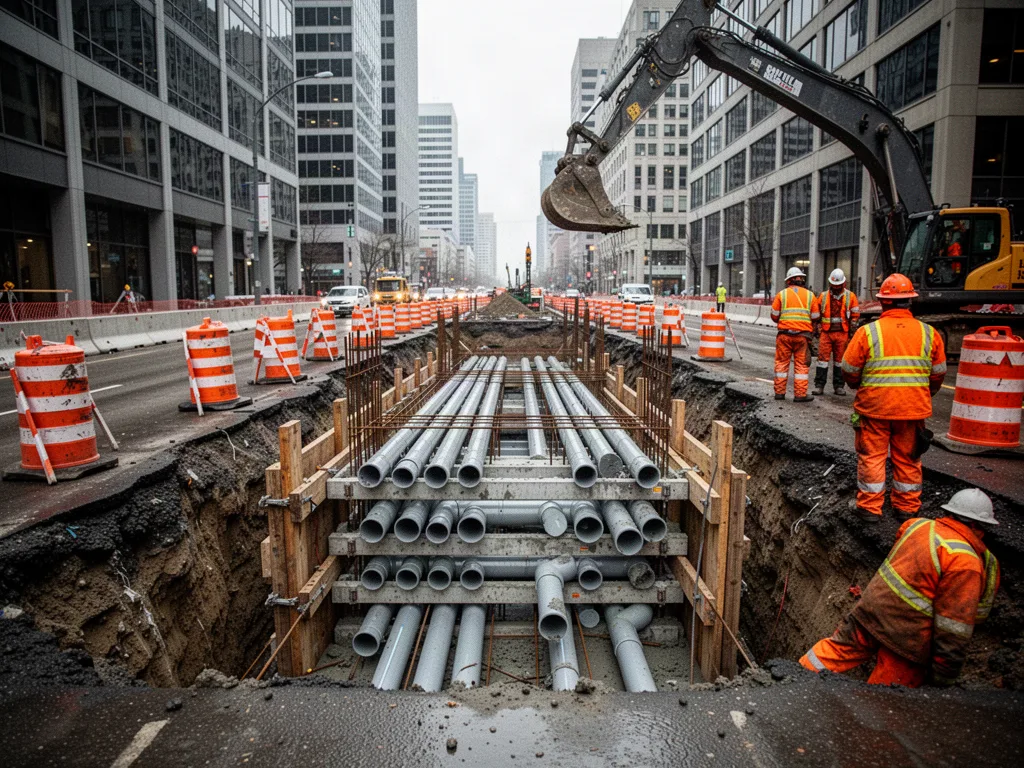
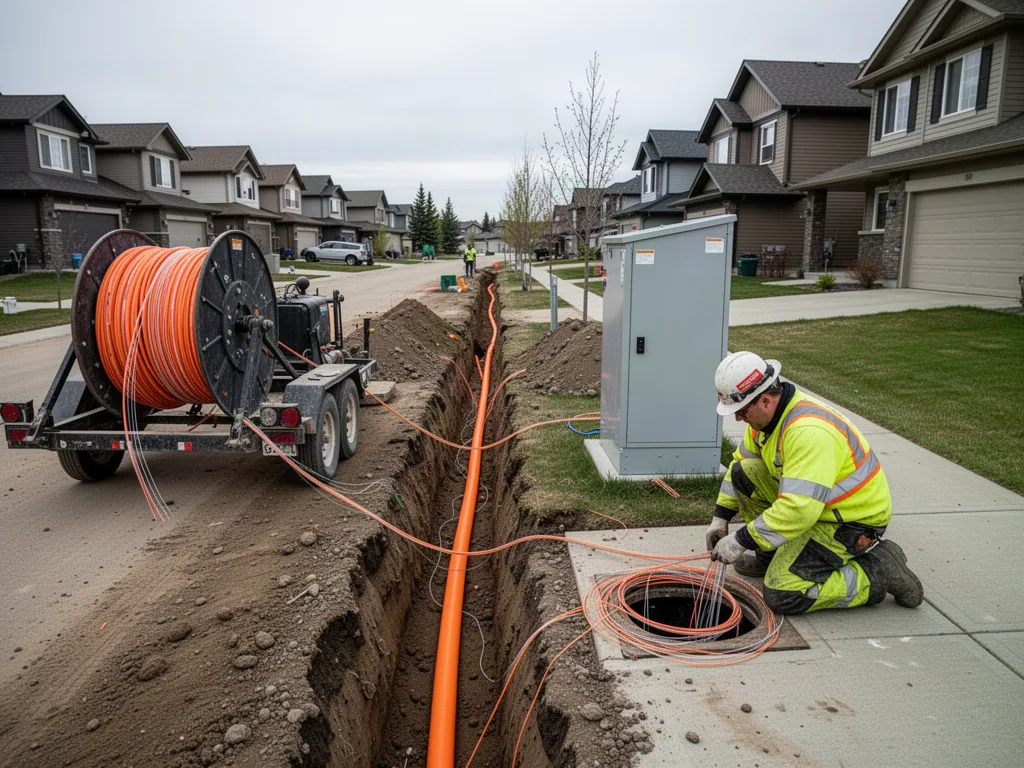
Operations were dispersed across active roadways and residential boulevards, requiring stringent traffic accommodation and public safety measures. The call-off nature of the contract meant that work volumes and emergency response requirements were highly unpredictable.
Our approach.
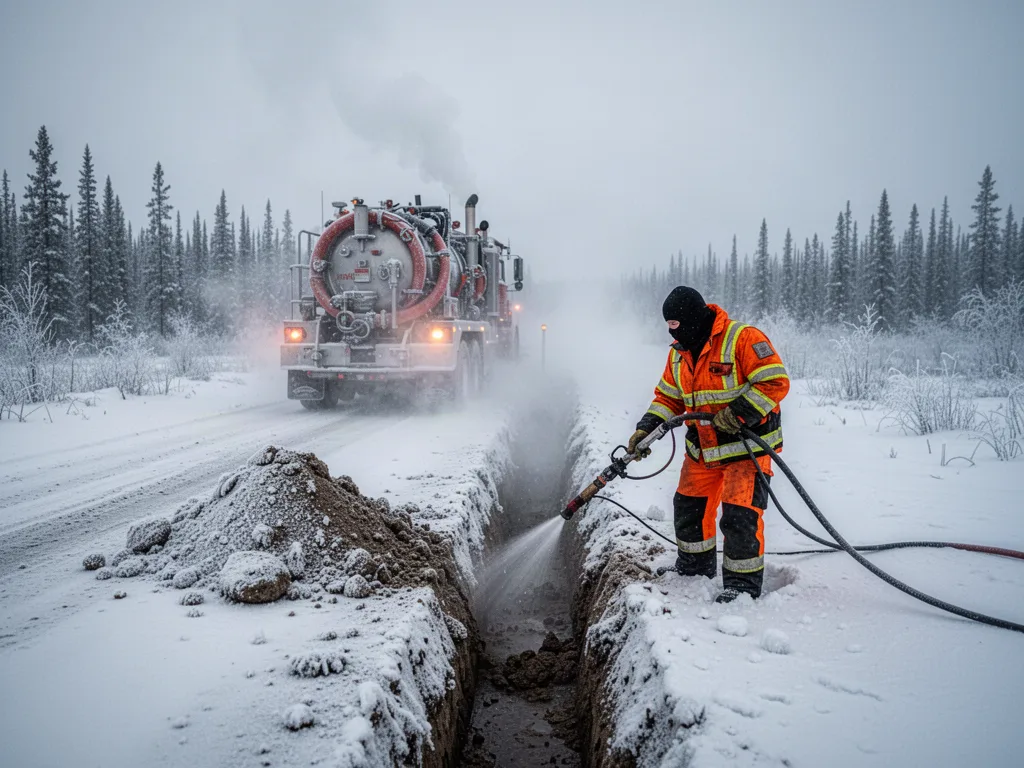
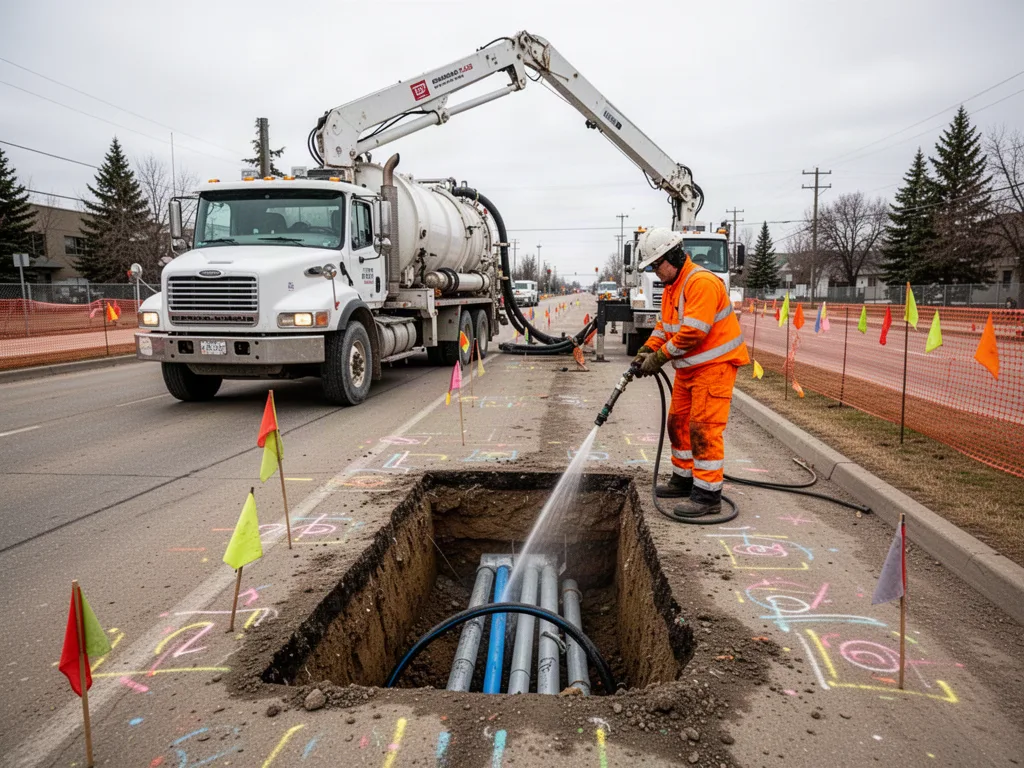
ASI deployed dedicated hydrovac crews on rotation, establishing high-pressure water and industrial vacuum as the sole excavation method permitted inside the utility tolerance zone. Every test hole was executed to non-destructive standards, completely removing the risk of mechanical strike.
Technicians recorded precise depth, offset, and photographic evidence for every exposed asset before backfilling. Site restoration was completed using cold-patch asphalt or compacted fill on the same shift, ensuring public roadways were left safe and traffic-ready immediately.
The result.
Across two years, 412 test holes were completed without a single utility strike or damage claim. The detailed exposure records were fed directly into the client's design set, verifying the alignment for subsequent construction phases.
The standby rotation model ensured that emergency callouts were mobilised and on-site within the agreed response window. The proactive daylighting program effectively neutralized subsurface risks before major civil works commenced.